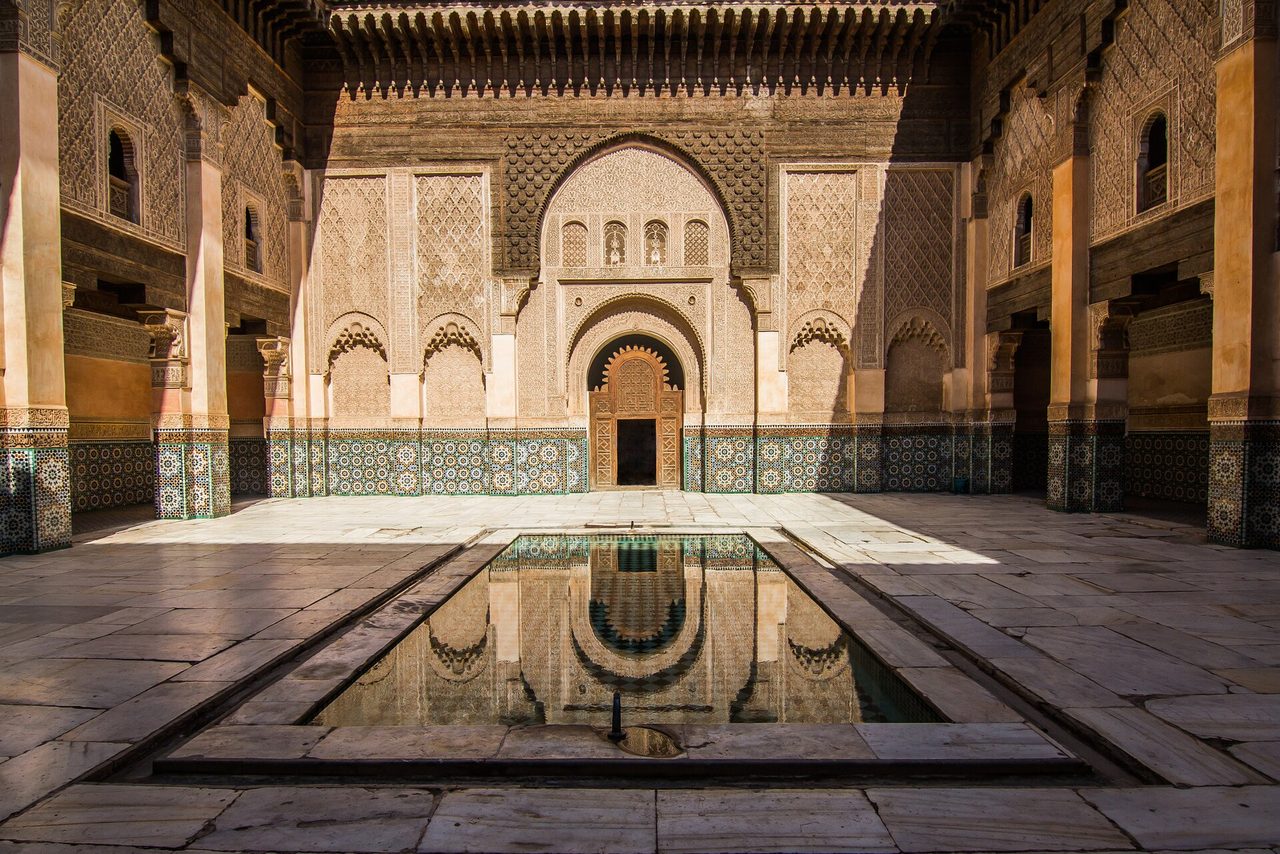
The building and its history
The madrasa was founded in the 14th century and rebuilt in the 16th, then closed for a long restoration before reopening in the 2020s. Students once lived and studied here, sleeping in tiny cells around the courtyard.
The decoration is the point: carved cedar, stucco, zellige and marble arranged with remarkable precision. The central basin reflects the arches and makes the small courtyard feel larger than it is.
Visiting
Come early. The courtyard is small and fills quickly, and the upper gallery is the best place to escape the crowd. Look through the student cells; they make the scale of the place clear.
The madrasa is surrounded by souks, so it is easy to combine with a morning of walking and a café stop. There is no café inside; use the nearby spice square or a medina rooftop afterwards.
Good to know
- Arrive at opening for the empty courtyard photographs.
- Take water; the courtyard is bright and the galleries are narrow.
- Tickets are sold at the entrance; no advance booking is needed.
Related reading
View all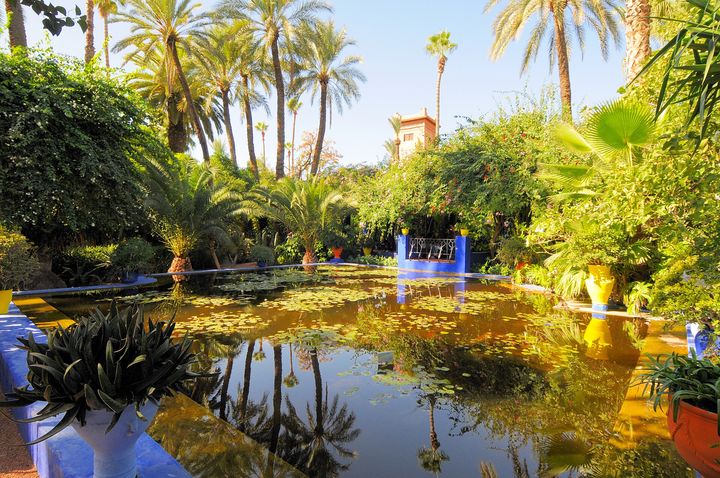
Gardens & museums
Jardin Majorelle: a blue garden in Marrakech
The most famous garden in Marrakech is small enough for an hour and dense enough to slow you down. Come for the cobalt-blue villa, the…
Read more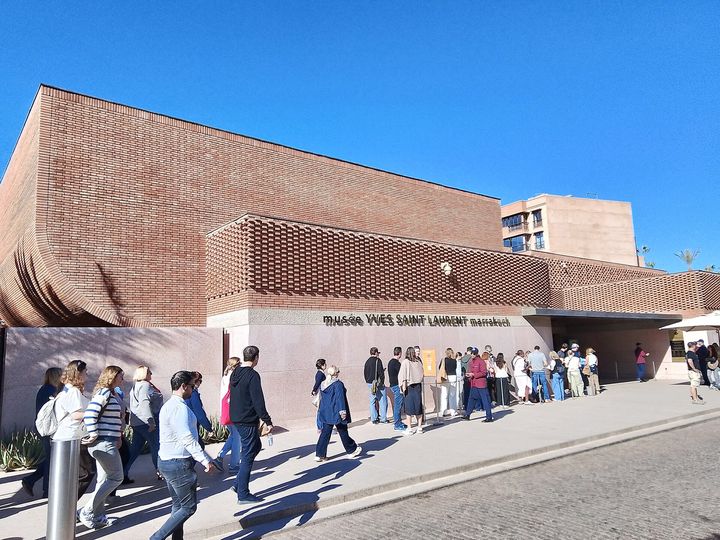
Gardens & museums
Musée Yves Saint Laurent
A taut, brick-clad building next to Jardin Majorelle, designed by Studio KO to hold the couturier’s archive. Even if fashion is not…
Read more
Gardens & museums
Musée Berbère
A compact museum inside Jardin Majorelle, dedicated to the material culture of Amazigh communities. It is the kind of place that…
Read more